Helping Australian operators improve reliability and performance
Across Australia's mining, oil and gas, power and industrial sectors, operators are managing aging assets while facing increasing pressure to improve reliability, availability and performance.
Maintenance budgets remain constrained, yet expectations around uptime continue to grow. Asset owners are being challenged to extend equipment life, reduce unplanned downtime and make smarter maintenance decisions.
Condition Monitoring has become a critical tool in meeting those challenges. By identifying developing issues before failure occurs, it enables organizations to improve reliability, optimize maintenance activity and reduce operational risk.
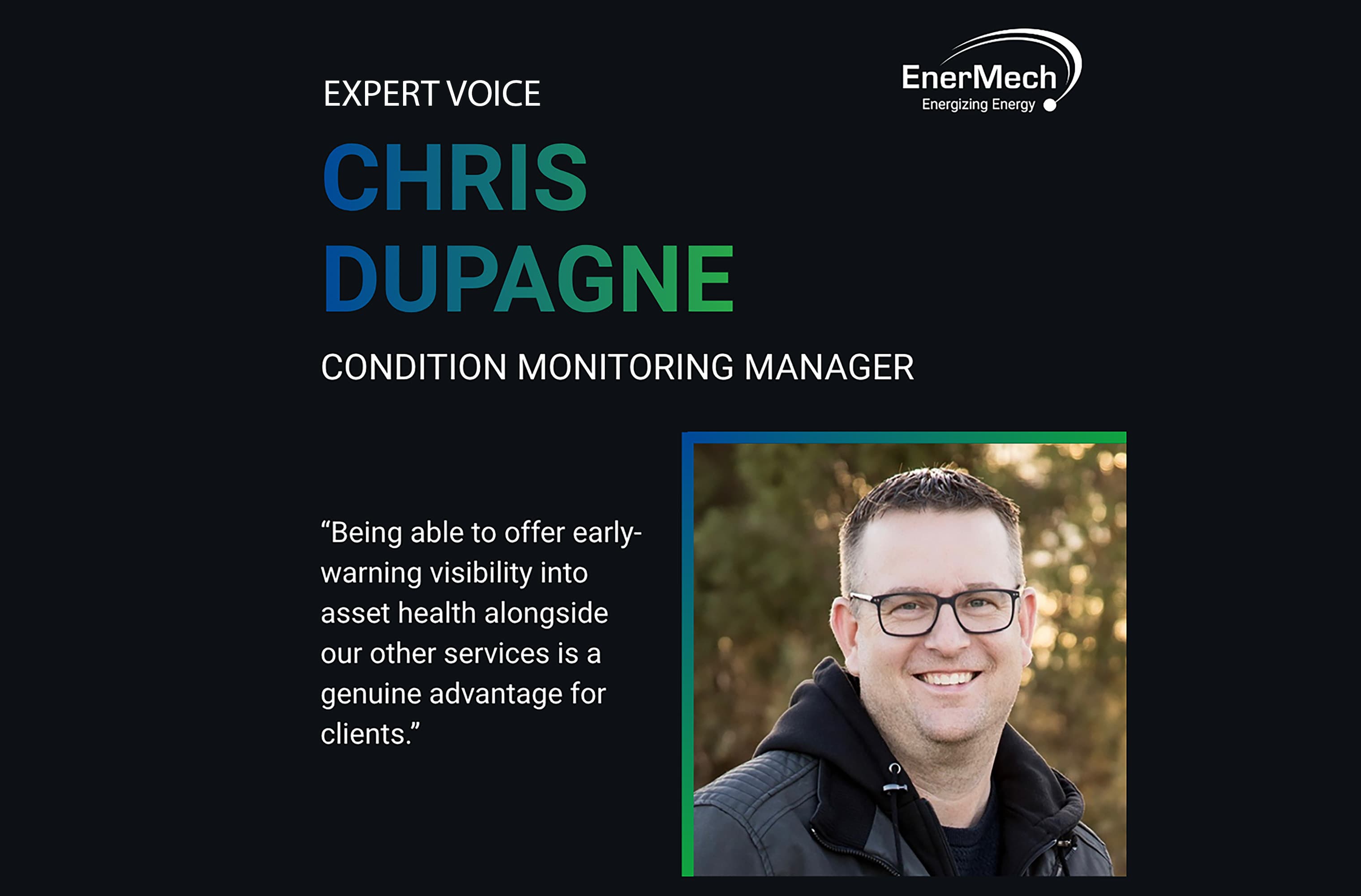
To support growing demand in Australia, EnerMech is strengthening its Condition Monitoring capability. Leading that effort is Perth-based Condition Monitoring Manager Chris Dupagne, who brings more than 21 years of industry experience, including 15 years specializing in Condition Monitoring, reliability engineering and asset integrity.
We spoke with Chris about the evolving role of Condition Monitoring, the challenges facing asset operators and where he sees the greatest opportunities to improve performance and reliability.
Tell us about your background and experience in Condition Monitoring.
I started my career as a Mechanical Fitter before moving into Condition Monitoring more than 15 years ago. Since then, I've worked across a broad range of industrial environments, helping operators improve equipment reliability, investigate failures and develop maintenance strategies that deliver measurable operational improvements.
My experience spans vibration analysis, infrared thermography, oil analysis and reliability engineering, working closely with maintenance and operations teams to better understand asset performance and equipment health.
For those unfamiliar with the discipline, what is Condition Monitoring?
Condition Monitoring is the process of assessing the ongoing health of equipment and assets to identify early signs of deterioration or failure.
Using techniques such as vibration analysis, thermography and oil analysis, we can detect emerging issues before they become critical failures. Rather than relying solely on scheduled maintenance or reacting when equipment breaks down, Condition Monitoring provides the information needed to make proactive decisions based on the actual condition of the asset.
Ultimately, it helps organizations reduce risk, prevent unplanned downtime and improve operational efficiency.
How has Condition Monitoring evolved during your career?
The industry has changed significantly.
When I first entered the field, much of the data collection and analysis process was manual. Today, advances in sensors, wireless technology, automation and data analytics provide far greater visibility into asset performance and equipment health.
What hasn't changed is the importance of experienced people interpreting that information. Technology delivers more data than ever before, but organizations still need technical expertise to translate those insights into practical maintenance and reliability decisions.
Why is Condition Monitoring becoming more important?
Many operators are managing aging infrastructure while facing increasing expectations around reliability, availability and uptime. At the same time, budgets and resources remain under pressure.
Condition Monitoring helps maintenance teams focus effort where it delivers the most value, providing early visibility of developing issues and enabling more informed maintenance decisions.
Ultimately, it helps extend asset life, reduce unnecessary maintenance activity and prevent costly downtime.
Where can Condition Monitoring deliver the biggest benefits?
The greatest value comes from preventing unexpected failures.
A single equipment breakdown can have a significant impact on production, maintenance costs and operational performance. By identifying developing issues before they escalate, operators can plan corrective action at the right time and avoid costly disruption.
Condition Monitoring also supports better maintenance planning, optimized expenditure and greater confidence in operational decision-making.
How does Condition Monitoring complement EnerMech's wider service offering?
One of the biggest advantages is how naturally it connects with EnerMech's existing asset integrity, maintenance and inspection services.
Condition Monitoring provides valuable asset intelligence that supports maintenance planning, inspections, reliability improvements and broader asset management strategies. Bringing these services together creates a more integrated approach for customers and helps them gain greater value from their maintenance investments.
It also allows issues to be identified earlier, enabling maintenance and inspection activities to be scheduled more effectively and with less operational disruption.
What are your priorities for Australia over the next 12 months?
Our priority is to build on EnerMech's strong customer relationships and demonstrate where Condition Monitoring can deliver measurable operational value.
We have the people, expertise and technology to support customers from day one. As demand grows, the opportunity is to help operators improve equipment availability, reduce maintenance costs and gain greater confidence in asset performance.
As aging infrastructure and performance expectations continue to shape the industry, Condition Monitoring will play an increasingly important role in safe, reliable and efficient operations.